
Iran’s Steel Industry in Two Different Worlds: Dubai Conference and Domestic Factories
According to Ahan 666, Iran’s steel industry has attracted the attention of the international community in recent years, especially with the growth of sponge iron production, which plays an important role in the steel supply chain. According to the latest report by the World Steel Association, global sponge iron production reached 140.8 million tons in 2024, and Iran took second place with a production of 34.1 million tons after India, which produced more than 54 million tons. These statistics are not just raw figures; they also indicate Iran’s significant share in the global market and its strategic importance in the steel industry. Nearly half of global sponge iron production is carried out by Iran and India, and this share highlights Iran’s capacity to meet part of global needs and even play a role in exports.
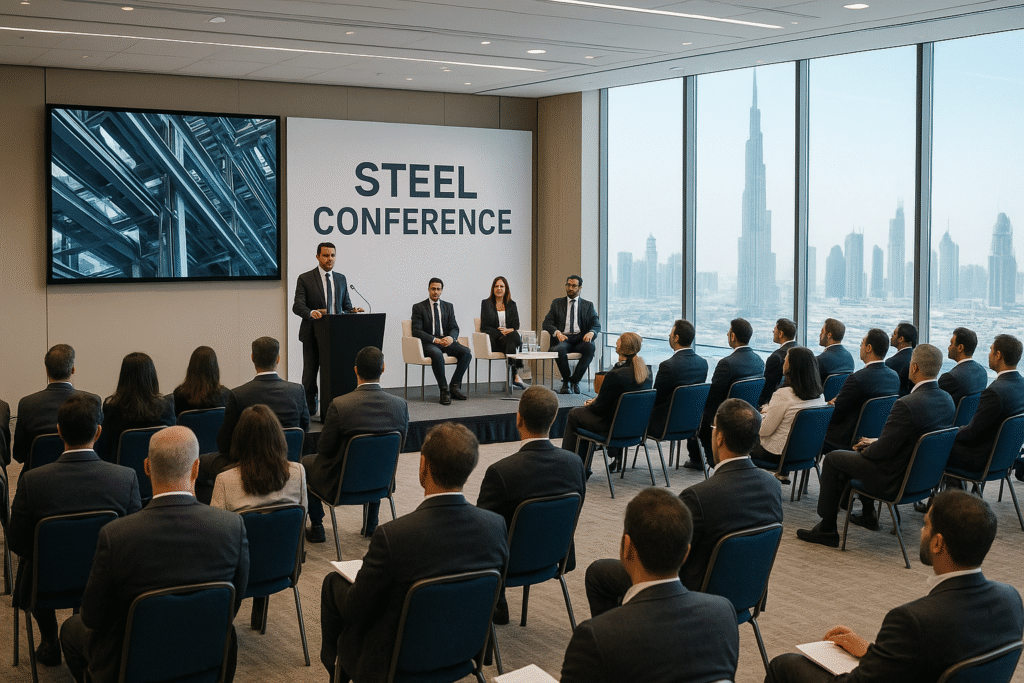
Thank you for reading this post, don't forget to subscribe!At the Dubai International Steel Conference, executives and experts emphasized that Iran, with a production capacity of 2.6 million tons of briquettes, has significant export potential in addition to meeting domestic needs. These data provide a clear perspective on Iran’s production capacity, but when these capacities are combined with the realities of domestic policymaking, bureaucratic problems, and complex economic conditions, a different picture of the domestic market emerges. In other words, high production capacity becomes a real advantage only when it is accompanied by appropriate supportive policies and economic stability; otherwise, even Iran’s global standing may be affected by these limitations in the long run.
Support packages: promises that remained unfinished
Iran’s steel industry has repeatedly suffered from a lack of real support in recent years. Although several support packages have been approved, their implementation has been inadequate due to numerous operational problems. The latest support package was designed around five main areas: financial support, foreign exchange policies, infrastructure development, trade regulations, and export facilitation, but so far only about 20 percent of it has been implemented. These failures are due to bureaucratic problems, banking restrictions, foreign exchange commitments, and import barriers that have prevented the implementation of key clauses in the package, resulting in a deep gap between declared policies and industrial realities.
Economic experts believe that this situation has left steel producers and iron and steel market players with severe uncertainty. The lack of stable and operational support makes long-term production planning difficult and makes investment in new projects risky. In fact, even Iran’s leading position in sponge iron and briquette production cannot guarantee real growth and development of the industry without effective and sustainable policies.
The domestic hardware market and the impact of currency fluctuations
One of the biggest challenges for the domestic iron and steel market is its heavy dependence on exchange rate fluctuations. The decline in the dollar to below the 98,000 Toman channel in recent weeks has quickly affected the price of steel sections, causing noticeable changes in different market segments. For example, the price of rebar in some factories experienced a decrease of 100 to 700 thousand Tomans, steel beams in various sizes experienced a slight increase, and steel sheets in large factories such as Mobarakeh Steel decreased by between 200 and 600 thousand Tomans.
These fluctuations indicate that the domestic market is more dependent on financial indicators and exchange rates than on production capacities or industrial planning. This dependence makes the decision-making environment for producers and investors risky and reduces market predictability. In such circumstances, long-term planning for production and supply is difficult, and market participants are forced to react to short-term exchange rate changes instead of focusing on improving production processes and increasing product quality.
Domestic opportunities and achievements
Despite numerous challenges, Iran’s steel industry still has significant technological and specialized capabilities. A clear example of this capability is the production of steel ingots required by beam rolling mills by the National Iranian Steel Industrial Group. These successes show that with sustainable support policies coordinated with economic infrastructure, Iran can not only stabilize the domestic market but also increase its export share.
Optimal use of these capacities requires two key actions:
- A serious review of support policies with the aim of removing bureaucratic obstacles, ensuring the implementation of laws, and creating operational facilities for producers.
- Creating relative stability in the foreign exchange market so that producers and investors can make long-term and accurate planning and implement development projects without high risk.
Only by realizing these two factors can the country’s actual capacities be transformed into real opportunities for developing and strengthening Iran’s position in the global market, and the domestic hardware market can move away from the current unstable situation.
The future of Iran’s steel industry depends on stability and operational support
Iran’s steel industry faces two different challenges: on the one hand, high production capacity and an established global position, and on the other, an unstable domestic market and ineffective support policies. Combining these production capacities with stable executive policies and exchange rate management can pave the way for sustainable growth of the Iranian steel industry and the development of the domestic market.
For steel industry activists and iron market investors, it is essential to pay attention to two key factors: operational support and economic stability. Only with these two measures will Iran be able to strengthen its position in the global market and save the domestic market from the current fluctuations and instability, pave the way for the long-term development of the country’s steel, and realize real economic opportunities.